
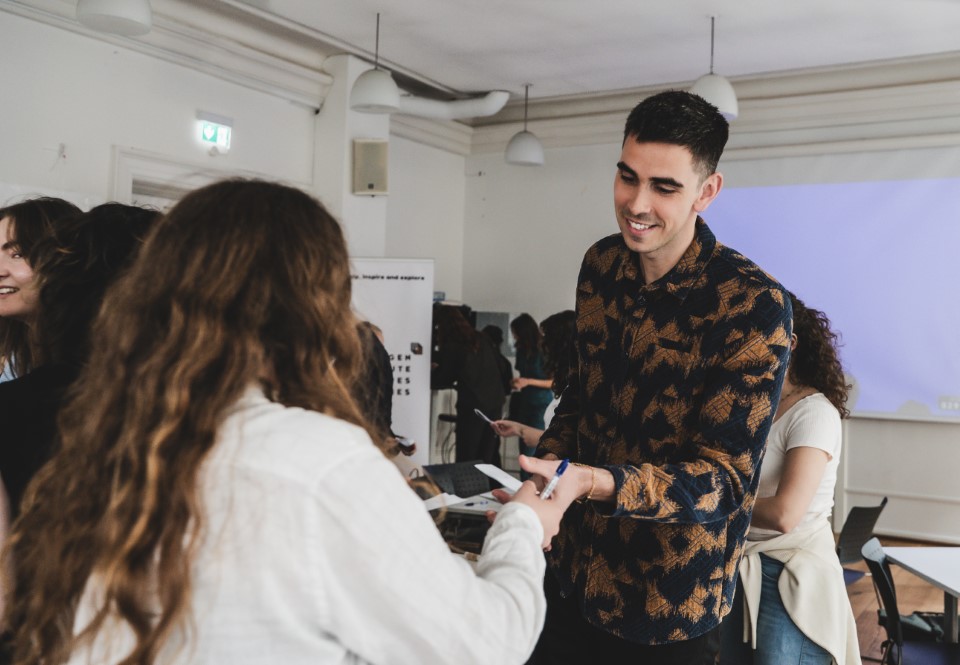
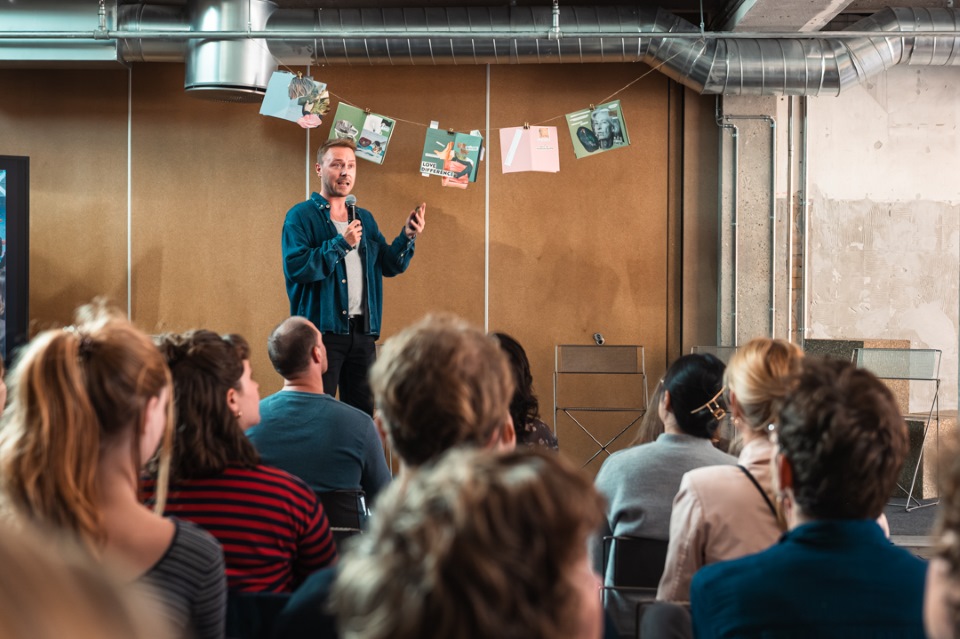
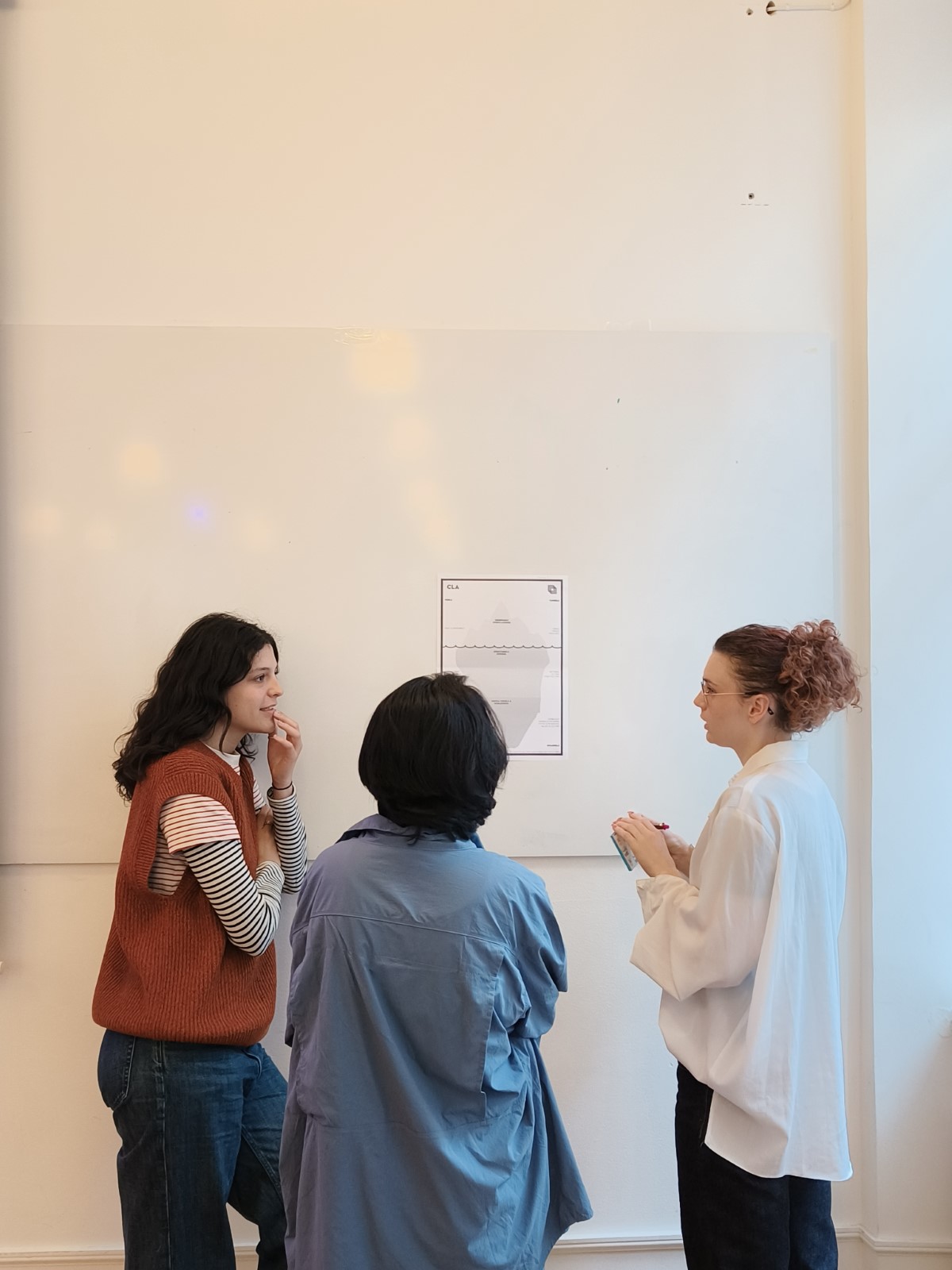
Futures Lab is a seven-workshop learning journey built on futures literacy, strategic foresight, and collective exploration. Over the course of the programme, students work with real-world societal challenges from sustainable food systems to future creativity, security, and lifestyles. They are introduced to methods such as horizon scanning, scenario building, and causal layered analysis, that are used to question assumptions, engage with complexity, and shape alternatives futures. Based on five cases the students develop futures-oriented concepts rooted in their own values, imaginations and explorations of desired futures.
As a non-formal learning space, Futures Lab emphasises:
(Further detail on structure, principles, and methods can be found in the Futures Lab Playbook.)
Futures Lab successfully gathered a diverse, international cohort:
Following the 40+ students along Futures Lab, we noticed how something shifted. What began as curiosity became confidence. What began as uncertainty became a sense of agency. This is reflected in our evaluation, and in conversations from the workshops and salons.
Many students arrived unsure whether their actions can meaningfully influence the future. By the end of the program, nearly half described themselves as strongly believing that their choices today can shape the future. The experience and feeling that the future is not fixed, but something students can participate in shaping is one of the clearest signs that futures literacy is emerging. “I feel like now I can understand how to understand futures. Envision, dream, create them.” one of the participants explained.
Hope also grew. Where fewer than half began the course feeling hopeful about the future, by the end this had risen to a clear majority. Not because the world had become more certain but because the students become stronger at navigating in the uncertainty of the present. Their imaginative competencies grew stronger too. A student explains how; “I now know how it feels to explore many possible futures with other people and have skills to work towards scenarios that challenge the status quo.”. Almost all participants felt able to imagine multiple possible futures, but by the final workshop every single student described this as part of how they now think. “[I will take with me] the feeling that I can actually change something, even if it’s a small thing.” says a participant in the final evaluation.
Perhaps most importantly, students grew more comfortable questioning the narratives they are part of and have inherited from the past. Early in the program, only a minority felt at ease challenging dominant assumptions about the future. After seven workshops, that confidence more than doubled. As they developed these capacities, they also began to see the relevance of futures thinking in their own fields of studies and work - from art to engineering, from public policy to psychology. By the end of the lab, almost nine in ten students say they can clearly relate the future to their area of study, making foresight a lens they carry into their everyday academic and professional lives.
These stories of greater agency, stronger hope, expanded imagination, critical confidence, and relevance to one's own field are the early signs of long-term futures literacy. They are the beginnings of the cultural and societal change that CIFS aspire to be co-creator of.
.jpg)
From the beginning, Futures Lab was designed to be a shared and collaborative space for learning.
The Futures Lab Playbook is a practical guide for educators, institutions, and community organisers who want to run their own version of the lab.
By opening our process, methods, and principles, CIFS aims to create the conditions for others to cultivate futures literacy and imagination in their own contexts. This is our way of ensuring that futures literacy and foresight competencies as a field of practice expands over time across civil society.